


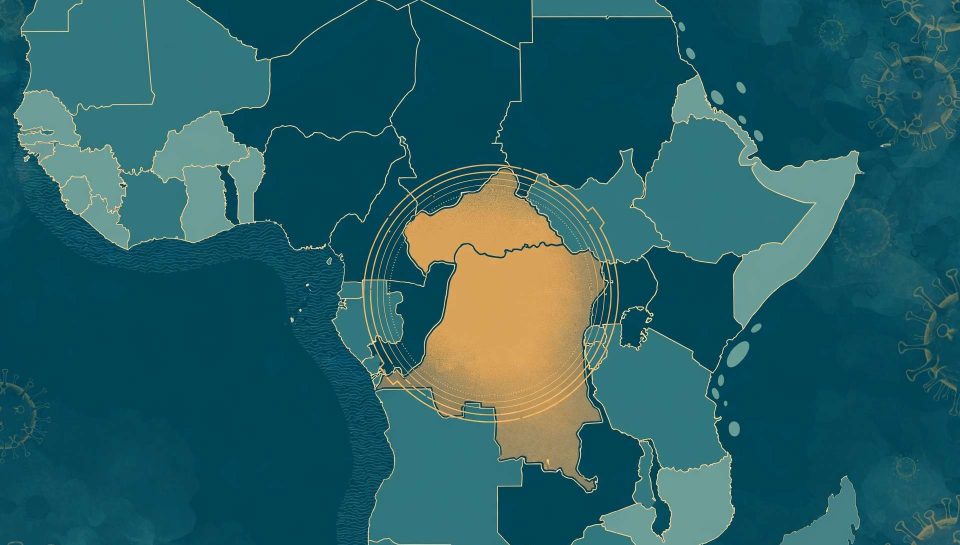
More than 5,000 people have now died in the Democratic Republic of the Congo’s Ebola outbreak, according to figures released by the country’s health ministry on Saturday, November 1, 2026. The ministry reported 5,026 deaths among 10,351 confirmed cases, making this the deadliest Ebola outbreak in Congo’s history and the second-deadliest ever recorded. The virus has reached eight of the country’s 26 provinces, spilled into neighbouring countries, and prompted the United States to introduce a new travel declaration for all international air passengers from November 3.
The milestone matters beyond Congo because it exposes a response that is losing ground: around four in five new infections occur outside known transmission chains, according to Africa CDC figures reported by the Associated Press. With no approved vaccine or treatment for this strain, containment depends on finding cases fast, tracing contacts, and winning trust in conflict-affected areas.
Key takeaways
- DRC health ministry figures reported on November 1: 10,351 confirmed cases and 5,026 deaths, a case fatality rate of 48.6 percent.
- The outbreak is driven by the rare Bundibugyo strain, for which no vaccine or specific treatment is approved.
- About 80 percent of new infections occur outside known transmission chains; roughly one-third of deaths happened outside treatment centres.
- Cases have been confirmed in Kenya and Nigeria; Uganda has reported no new infections since August.
- From November 3, all passengers boarding international flights to the United States must attest they have not been in the DRC in the previous 21 days.
- A vaccine trial launched in Bunia on October 23 is testing whether an existing Ebola vaccine can help against Bundibugyo.
DRC Ebola outbreak: what the new figures show
The latest figures come from the DRC health ministry and were reported on November 1 by the BBC and by Reuters. The ministry counted 5,026 deaths and 10,351 confirmed cases, with 2,788 people recovered and 1,101 in treatment or quarantine. The case fatality rate stands at 48.6 percent: nearly half of confirmed patients have died.
Those numbers need one qualification. Case counts in a fast-moving outbreak are snapshots tied to a reporting date, so tallies published days apart will not match — a European CDC tally from October 26 counted 10,141 cases and 4,928 deaths. What is consistent across every tally is the direction: the outbreak is still growing more than five months after it was declared.
The outbreak was officially declared on May 15, 2026, in Ituri province in the north-east, though genetic sequencing suggests the virus had circulated undetected since February. It became the deadliest outbreak in Congo’s history in August, passing the previous record of 2,299 deaths from 2018 to 2020. It is the country’s 17th Ebola outbreak on record, according to the United Nations.
“It is a very tragic milestone because it is just not a number,” Dr Patrick Otim, a World Health Organization programme area manager, told the Associated Press. The WHO’s Africa office has called for scaled-up control measures, greater access to affected areas, and more community outreach.
Why the Bundibugyo strain changes the response
Most Ebola outbreaks the world has heard about were caused by the Zaire strain, behind the 2014 to 2016 West African epidemic and the strain for which vaccines and treatments were developed. This outbreak is caused by Bundibugyo virus, a rarer strain first identified in Uganda in 2007, and there is no approved vaccine or specific treatment for it.
That single fact shapes almost every decision in the response. Health workers cannot fall back on a licensed vaccine to ring-fence cases, and clinicians cannot offer a proven drug; care is supportive, delivered in isolation units that protect staff and other patients. One lead is being tested: a German laboratory study found that people vaccinated with Ervebo, the approved Zaire-strain vaccine, generate T-cell responses that can recognise Bundibugyo virus. Those are laboratory results, not proof of protection, and the question is now being tested in people, as described below.
Why the virus is outrunning contact tracing
Contact tracing only works when most new cases can be linked to someone already known to be ill. Here, that link is missing most of the time: Africa CDC figures reported by the Associated Press put roughly 80 percent of new infections outside known, monitored chains. The Africa CDC’s target — linking at least 95 percent of new cases to known contacts before the outbreak can be considered under control — remains far out of reach.
The geography explains part of the gap. The outbreak has reached 67 of Congo’s 178 health zones across eight provinces, with 50 zones still reporting active cases in the figures cited by the Associated Press. The epicentre remains Ituri province, with North Kivu the other main centre. Both are conflict-affected areas in the east, where insecurity limits access for response teams and makes communities harder to reach and reassure. The WHO estimates that roughly one-third of recorded deaths were people who died outside treatment centres before they could be tested — people who never entered the system, whose contacts may never have been traced.
How far the outbreak has spread beyond Congo
Cross-border spread so far has been limited, but it is real, and it is why other countries are tightening precautions. Kenya’s health ministry had confirmed nine cases and two deaths by October 23, according to the US Centers for Disease Control and Prevention. Nigeria reported one case on October 20, a patient subsequently evacuated to Switzerland for care; more than 40 contacts were placed on a 21-day no-fly list while tracing continued. Uganda reported 21 confirmed and probable cases and three deaths earlier in the outbreak, with the last case confirmed on June 21 and none since August, according to the CDC’s latest summary. Genomic testing has linked the Nigerian and Kenyan cases to the same lineage circulating in the DRC, though investigators had not established precisely how the Nigerian patient became infected.
Precision matters here too. The patient evacuated to Switzerland was moved there for treatment — a medical evacuation, not evidence of community transmission in Europe. No community spread outside Africa has been reported, and the CDC assesses US public risk as low.
What the new US travel rule changes on November 3
From 11:59 p.m. Eastern time on November 3, 2026, every passenger boarding an international flight to the United States must complete a declaration attesting that they have not been in the Democratic Republic of the Congo during the previous 21 days, according to the CDC order reported by Contagion Live and other outlets. The requirement applies regardless of nationality, including to passengers connecting through a US airport, and is scheduled to run until December 18, 2026, though the CDC can extend, amend, or lift it as the outbreak develops. Travellers who have been in the DRC within the 21-day window are barred from boarding commercial flights to the United States under restrictions in place since May. The CDC also recommends avoiding all travel to Ituri and North Kivu, avoiding nonessential travel to Haut-Uele and Tshopo, and enhanced precautions elsewhere in the DRC or Uganda, with symptom monitoring for 21 days after leaving.
For readers in Pakistan, no case connected with this outbreak has been reported in the country, and no Pakistan-specific restriction has been announced in the reporting reviewed for this article. Anyone travelling to or from affected regions should check their destination health authority’s current guidance before departure, because measures like the US attestation are set and revised on outbreak timelines, not annual schedules.
The Bunia vaccine trial that could change the picture
The most consequential experiment in the response began on October 23 in Bunia, the capital of Ituri province. The Tumaini adaptive vaccine trial is using ring vaccination — vaccinating the contacts of confirmed cases, and the contacts of those contacts — with tens of thousands of doses of Ervebo to measure whether it offers clinical protection against Bundibugyo. Bundibugyo-specific vaccine candidates from Oxford and Moderna are to be added once safety checks are complete, according to Particle‘s reporting on the trial. Ring vaccination is demanding in a conflict-affected area, but it is the fastest ethical way to answer the question that matters. Developers and experts cited in trial coverage say broad public availability of a Bundibugyo-specific vaccine is unlikely before mid-2027. Until then, the trial tests whether an existing tool can be repurposed, not a promise of imminent protection — and it illustrates how strain-specific recent Ebola progress was, with surveillance, isolation, and trust carrying the response when the pharmaceutical cupboard is bare.
How this outbreak compares with past Ebola outbreaks
| Outbreak | Cases | Deaths | What set it apart |
|---|---|---|---|
| West Africa, 2014 to 2016 | 28,616 confirmed | 11,310 | The deadliest Ebola epidemic on record; spread across Guinea, Liberia and Sierra Leone. |
| DRC, 2018 to 2020 | Not the focus of current tallies | 2,299 | Congo’s previous deadliest outbreak; fought in conflict-affected eastern provinces with a licensed Zaire-strain vaccine available. |
| DRC, 2026 (ongoing) | 10,351 confirmed | 5,026 | Congo’s deadliest and the second-deadliest globally; Bundibugyo strain with no approved vaccine or treatment; about 80 percent of new infections outside known chains. |
The comparison carries a warning and a qualification: this outbreak is killing people at what the UN has described as a much faster rate than Congo’s 2018 to 2020 outbreak, but the 2026 figures are still rising and counted differently across sources, so the table is a snapshot of reported figures on November 1, not a final toll.
What to watch next
Three indicators will tell us whether the outbreak is turning: the contact-linking rate moving toward the Africa CDC’s 95 percent target; the share of deaths outside treatment centres falling, meaning sick people reach care earlier; and the count of health zones with active cases stops growing, with no further cases in Kenya or Nigeria.
Two milestones sit on the calendar. The US attestation requirement takes effect on November 3 and runs to December 18, and its extension, amendment, or lifting will signal how American health authorities read the risk. Further ahead, early readouts from the Tumaini trial will determine whether the response gains a pharmaceutical tool or must rely on containment alone. The outbreak has been growing since May, yet it crossed into global headlines only when the death toll passed a round number. The number matters because it may finally move resources — not because the crisis began this week.
Related coverage on this blog: the Strait of Hormuz draft deal, Europe’s cost-of-living protests, and the 2026 US midterm elections guide.
Frequently asked questions
How many people have died in the DRC Ebola outbreak?
DRC health ministry figures reported on November 1, 2026, put deaths at 5,026 among 10,351 confirmed cases — the deadliest in Congo’s history and the second-deadliest ever recorded, behind the 2014 to 2016 West African epidemic.
Why is there no vaccine for this Ebola outbreak?
This outbreak is caused by Bundibugyo virus, a rarer strain with no approved vaccine or specific treatment. Approved vaccines such as Ervebo were developed for the Zaire strain; a Bunia trial is testing whether Ervebo protects against Bundibugyo.
Has Ebola from this outbreak spread outside the DRC?
Kenya has confirmed nine cases and two deaths, and Nigeria one case whose patient was evacuated to Switzerland for care. Uganda reported cases earlier but none since June. No community transmission outside Africa has been reported.
What does the new US travel declaration require?
From 11:59 p.m. Eastern time on November 3, 2026, every passenger boarding an international flight to the United States must attest they have not been in the DRC in the previous 21 days. The measure is scheduled to run until December 18, 2026.
Is there a risk to people in Pakistan from this outbreak?
No case connected with this outbreak has been reported in Pakistan. Travellers to affected regions should check current destination guidance and monitor for symptoms for 21 days after leaving an affected area. This article is general information, not medical advice.
Conclusion: a milestone that should move the response, not just the headlines
The DRC Ebola outbreak passing 5,000 deaths is a measure of failure as much as of scale: a failure, so far, to find cases fast enough, to trace contacts completely enough, and to reach communities cut off by conflict. What could change that arithmetic is visible: tracing climbing toward 95 percent, deaths moving inside treatment centres rather than outside them, and the Bunia trial delivering an answer the world can use. Until those indicators move, 5,026 is not a peak to report and forget. It is a baseline against which the next update will be judged.
Sources and Further Reading
- BBC via Ghana News Agency: 5,000 die in DR Congo’s deadliest outbreak
- Reuters via Seoul Economic Daily: Ebola deaths top 5,000 in Congo
- Associated Press via The Curtain: Ebola deaths pass 5,000 in Congo
- DD India: Global alarm as Ebola spreads from Africa to Europe
- Contagion Live, citing CDC: Outbreak tops 10,000 cases
- Qatar Tribune: DR Congo’s Ebola death toll surpasses 5,000
- Particle: Outbreak surges as trial tests whether existing vaccine can help
- Related blog coverage: Strait of Hormuz draft deal, Europe cost-of-living protests, US midterm elections guide.


