The United Nations peacekeeping mission in Western Sahara ended on 1 November 2026, after 35 years, because the Security Council could not agree on a replacement mandate. The mission, known as MINURSO, saw its authorisation expire at midnight on 31 October, and the United Nations began a liquidation period the next day. The end of the mission does not settle the status of Western Sahara, and the United Nations says its diplomatic work on a political solution will continue.
Summary: MINURSO ended after the Security Council failed on 30 October 2026 to adopt either a United States draft or a Russian draft. The United States text won 11 votes but was vetoed by Russia, while the Russian text won only three votes and fell short of adoption.
Key takeaways:
- MINURSO mandate expired at midnight on 31 October 2026, and liquidation began on 1 November.
- The United States draft received 11 votes in favour but was blocked by a Russian veto.
- The Russian draft for a straight one-year renewal received three votes in favour, one against, and 11 abstentions.
- MINURSO was created in 1991 to monitor a ceasefire and prepare a referendum that never took place.
- Secretary-General António Guterres said the mission ending does not cancel the right to self-determination.
What happened on 1 November
Secretary-General António Guterres confirmed on Sunday, 1 November, that MINURSO peacekeeping operations had concluded. In a statement delivered by his spokesperson, he said the departure of the mission does not abrogate what he called the inalienable right of the people of Western Sahara to self-determination, and he called on all parties to respect and promote their rights.
The practical change is immediate but limited. A smaller team reporting to the United Nations Department of Operational Support will oversee liquidation, including the return of equipment belonging to troop-contributing countries and the disposal of United Nations-owned equipment. Guterres asked for the full cooperation of the parties so the process can be completed in an orderly way as soon as possible.
That distinction matters. Liquidation is an administrative wind-down, not a ruling on who owns Western Sahara and not the end of United Nations diplomacy. The Secretary-General’s Personal Envoy, Staffan de Mistura, remains the channel for political efforts, and Guterres said the United Nations stands ready to support dialogue toward a peaceful resolution. He also warned that he remains concerned about the security situation and the risk of hostilities escalating, urging maximum restraint.
The Security Council vote that ended MINURSO
The decisive meeting took place on Friday, 30 October 2026, one day before the mandate expired. The previous mandate, set by Resolution 2797 in 2025, ran only through 31 October 2026. Two drafts were put to the 15-member Council, and neither was adopted. A resolution needs at least nine votes in favour, and no veto from a permanent member. The United States draft cleared the first test but not the second. The Russian draft failed the first test, so the American negative vote on that text did not need to operate as a veto.
| Draft | What it proposed | Vote | Outcome |
|---|---|---|---|
| United States draft, S/2026/868 | One-year extension, renamed mission, Morocco’s autonomy plan as the only basis for talks, scaled-back military component | 11 in favour, 1 against, 3 abstentions | Not adopted, blocked by a Russian veto |
| Russian draft, S/2026/870 | Straight one-year extension to 31 October 2027, on existing terms | 3 in favour, 1 against, 11 abstentions | Not adopted, short of nine votes |
Source: United Nations meeting account, 30 October 2026, corroborated by Xinhua reporting of the same tallies.
The United States delegate said the American draft would have supported the principle of self-determination and moved the 50-year conflict forward, calling the status quo unacceptable. Ambassador Mike Waltz later said it was truly unfortunate that, in 2026, the veto was used to preserve the letter R in the mission name, for referendum. Russia’s ambassador, Vasily Nebenzia, said Moscow opposed the draft because it favoured one side, and that the Council cannot automatically predetermine matters relating to sovereignty. The United Nations News account quoted the Russian delegate describing the veto as, in his words, a life-saving veto, so to speak.
Why the two drafts could not both pass
The two texts represented different answers to the central question: should the United Nations keep the referendum framework, or replace it with negotiations based on Moroccan autonomy? The United States draft would have extended the mission for a year but changed its character. It would have removed the word referendum from the mission name, renaming it the United Nations Mission in Western Sahara, or MINUSO, and made Morocco’s autonomy proposal the only basis for further talks. It won support from 11 Council members, including France and the United Kingdom, but Russia vetoed it.
The Russian draft offered continuity instead: a one-year extension to 31 October 2027 without the name change or the new negotiating basis. It won votes from China, Somalia, and Russia, with the United States voting against and 11 members abstaining. Pakistan abstained on both drafts, according to the Associated Press of Pakistan account carried by UrduPoint, which said Pakistan underlined the need for a mutually acceptable political solution through dialogue and consensus among the parties.
A mission built for a vote that never happened
MINURSO was established by Security Council Resolution 690 in 1991, in line with settlement proposals accepted in 1988 by Morocco and the Frente POLISARIO. Its original task was to monitor a ceasefire and prepare a referendum in which the people of Western Sahara would choose between independence and integration with Morocco. The referendum never took place. The core obstacle was voter eligibility: Morocco wanted the voter list to include Sahrawis living in territory it controls, while the Polisario insisted on using Spain’s colonial census, arguing that a wider list would tilt the outcome toward integration.
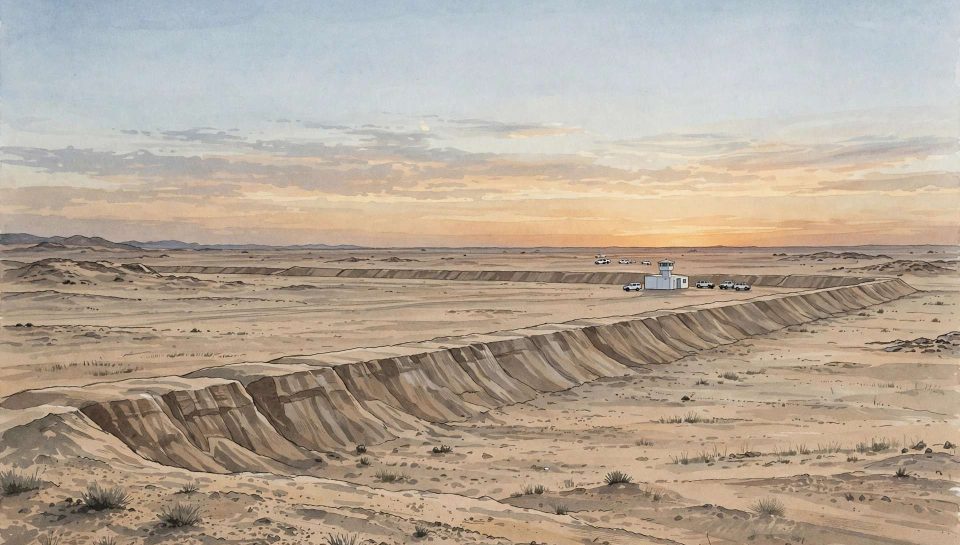
Western Sahara is a desert territory on the Atlantic coast of north-west Africa, roughly the size of Colorado, according to Associated Press reporting. Spain withdrew in 1975, and Morocco has considered the territory its own since then. The Polisario Front, an Algeria-backed movement acting on behalf of the Indigenous Sahrawi people, seeks an independent state, the Sahrawi Arab Democratic Republic. Morocco administers most of the territory, separated from Polisario-held areas by a long sand berm, with MINURSO team sites on both sides.
In 2007, Morocco put forward an autonomy proposal as a basis for negotiations, envisaging the territory as self-governing under Moroccan sovereignty. A year before the mission ended, the Council adopted a United States-drafted resolution that accepted Rabat’s plan to give the territory autonomy under Moroccan sovereignty as the most feasible solution, according to Reuters reporting. The 2026 American draft would have gone further, making autonomy the only basis for talks. Hostilities resumed in 2020, after the Polisario withdrew from the ceasefire following clashes around Guerguerat, a crossing point to Mauritania, and the United Nations said last month that the territory has since seen tensions and low-intensity hostilities.
What MINURSO looked like at the end
When its mandate ended, MINURSO was headquartered in Laayoune, with nine team sites, four west of the berm and five east of it, and a liaison office in Tindouf. It had about 200 civilian staff, military observers, and staff officers from more than 35 countries, plus a dedicated mine action capability, according to the United Nations. Its authorised strength was larger: the Associated Press reported an authorised force of 534 personnel and a 2026 to 2027 budget of more than 62 million dollars. The mission ending therefore removes a small observer presence, not a large standing army.
Guterres paid tribute to the 20 MINURSO personnel who lost their lives during the mission’s 35 years, and thanked its personnel, including Special Representative Alexander Ivanko, who led the mission through what the United Nations called a particularly challenging period after hostilities resumed in 2020.
How the parties reacted
Morocco’s royal palace welcomed the non-renewal, calling it a significant development in withdrawing the Western Sahara issue from the Security Council’s consideration. Morocco’s Foreign Minister Nasser Bourita told state media that the mission’s reference to a referendum, the R in its name, was an anachronism. Algeria’s Foreign Ministry expressed deep regret over the non-renewal, blaming what it called the excessive bias of the United States towards Morocco’s position. The Polisario Front said it was concerned at the deadlock in the Security Council meeting, according to Al Jazeera reporting.
Why it matters
First, there is a monitoring gap. For 35 years, MINURSO observers sat on both sides of the berm and reported on ceasefire violations. Without them, claims about incidents will be harder to verify independently. Second, the vote shows how great-power disagreement can end a mission even when a majority supports renewal: 11 members backed the United States draft, yet a single veto stopped it, and the alternative could not command a majority in return. The result was not a decision to close MINURSO on its merits, but a failure to agree on what should replace its old mandate.
Third, the dispute sits at the intersection of wider tensions: the Morocco and Algeria rivalry, United States and Russia competition in the Council, and a shift from referendums toward negotiated autonomy. A recent example of a high-stakes negotiation where rival drafts and disputed claims shaped the outcome is the Strait of Hormuz draft deal, where a reported framework and disputed incidents moved diplomacy together.
What happens next
In the short term, liquidation comes first, and no timetable for full physical withdrawal has been published in the statements reviewed for this article. Politically, three paths are open, and none is guaranteed: the Council could return with a new resolution, the Personal Envoy could pursue talks without a field mission, or the issue could drift with diplomacy continuing in statements but no agreed framework on the ground. Washington has said the status quo is unacceptable, which suggests it will press for a new text, while Russia has said any settlement must be acceptable to both sides, which suggests it will resist a text that predetermines the outcome.
Watch for three signals: any new Council draft and its vote count, any statement from the Personal Envoy about talks, and any independently reported incident along the berm. The United States midterm elections in 2026 also shape the political context in Washington, and protests across Europe show how domestic pressures can constrain governments that must also act internationally.
Frequently asked questions
What is MINURSO?
MINURSO is the United Nations Mission for the Referendum in Western Sahara, created in 1991 to monitor a ceasefire and prepare a referendum on the territory’s future.
Why did the referendum never happen?
The parties could not agree on who could vote. Morocco wanted a wider voter list, while the Polisario insisted on Spain’s colonial census. Without an agreed roll, the vote could not be organised.
Does the mission ending mean the United Nations has left Western Sahara?
No. Peacekeeping operations have ended and liquidation has begun, but the United Nations says it remains committed to a political solution through the Secretary-General’s Personal Envoy.
Could the Security Council revive the mission?
Yes, in principle. A new resolution would require nine votes and no veto, the same test both 2026 drafts failed in different ways.
Is Western Sahara now part of Morocco?
Its status remains disputed. Morocco claims it and administers most of it, the Polisario seeks independence, and the United Nations position, restated on 1 November, is a just, lasting, and mutually acceptable political solution that provides for the self-determination of its people.
Conclusion
MINURSO did not end because its work was finished. It ended because the Security Council could not agree on what should come next, and its mandate ran out while that disagreement remained unresolved. The mission leaves behind a referendum that never happened, a ceasefire that has frayed since 2020, and a political process that must now proceed without observers on the ground. Whether that process produces a settlement, a new mission, or a drift toward greater risk will depend on whether the Council can find a text that both a majority and all five permanent members can accept.
Sources and Further Reading
- United Nations News, Western Sahara: UN stands ready to keep supporting peace efforts as MINURSO mission ends, 1 November 2026
- United Nations media account, Security Council fails to adopt draft resolutions to renew MINURSO, 30 October 2026
- Al Jazeera, UN warns of security risks in Western Sahara as peacekeeping mission ends, 1 November 2026
- Reuters, UN peacekeeping mission in Western Sahara ends after 35 years, UN chief says, 1 November 2026
- Xinhua, Security Council fails to renew mandate of UN mission for Western Sahara, 30 October 2026
- Associated Press, UN peacekeeping mission in disputed Western Sahara ends after 35 years, 2 November 2026
- Associated Press of Pakistan via UrduPoint, UN Mission in Western Sahara begins liquidation after Security Council fails to extend mandate, 2 November 2026