


<article>

    <header>

        <h1>Ghost in the Machine: Navigating the Ethics of Artificial Intelligence</h1>

        <p class="subtitle">As algorithms begin to mirror human thought, we are forced to confront the moral boundaries of code.</p>

    </header>
<section>

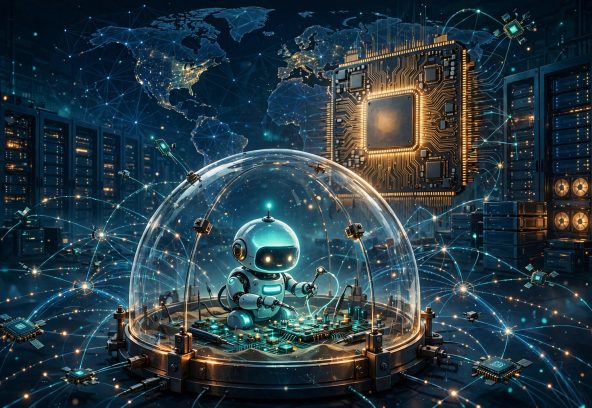
        <p>For centuries, the phrase "ghost in the machine"—coined by philosopher Gilbert Ryle to criticize the separation of mind and body—has served as a metaphor for the mysterious animating force of consciousness. Today, as Artificial Intelligence evolves from simple number-crunching software into generative powerhouses that can write poetry, diagnose diseases, and compose symphonies, the metaphor has taken on a literal urgency. There is no literal ghost, of course. There is only data, compute power, and millions of lines of code. Yet, the output feels increasingly sentient, raising a profound modern question: When we build machines that think like us, how do we ensure they share our values?</p>
<h2>The Mirage of Neutrality</h2>

        <p>One of the most pervasive myths in the tech industry is that algorithms are inherently objective. Because code is rooted in mathematics, we assume it is immune to the prejudices and flaws of human creators. However, AI models do not learn in a vacuum; they are trained on vast oceans of human history, culture, and language.</p>
<p>Consequently, when you feed historical data into a machine, you often teach it historical biases. From facial recognition software that misidentifies people of color at alarming rates to hiring algorithms that systematically downgrade resumes featuring women's names, the "ghosts" haunting our machines are often our own unexamined prejudices, amplified at scale.</p>
<h2>The Black Box Dilemma</h2>

        <p>As machine learning shifts toward deep neural networks, we encounter another ethical hurdle: the "black box" problem. Traditional software operates on explicit if-then logic that humans can easily trace and debug. Modern AI, however, builds its own pathways to conclusions through billions of invisible parameters.</p>
<blockquote>"We can build systems that tell us *what* the answer is, but they can rarely explain *why*. When an AI denies a loan, recommends a prison sentence, or flags a medical anomaly, the inability to interrogate its reasoning creates a massive accountability vacuum."</blockquote>
<p>If no human—not even the engineers who wrote the base architecture—fully understands how a specific output was generated, who bears responsibility when the algorithm gets it wrong?</p>
<h2>Autonomy, Agency, and the Human Edge</h2>

        <p>Beyond bias and accountability lies the deeper philosophical question of human agency. As generative AI automates everything from creative writing to customer service, we risk outsourcing not just our labor, but our critical thinking. What happens to human ingenuity when a machine can generate a passable essay, painting, or legal brief in three seconds?</p>
<p>Moreover, the integration of AI into high-stakes domains—such as autonomous weaponry and automated healthcare—forces us to draw hard ethical lines regarding life and death. Can a machine ever truly understand the value of a human life, or is it merely optimizing for variables in a loss function?</p>
<h2>Charting the Course Forward</h2>

        <p>Navigating the ethics of AI is not a problem that can be solved by engineers alone. It requires a multidisciplinary coalition of ethicists, sociologists, legal scholars, policymakers, and everyday citizens. To successfully exorcise the harmful ghosts in our machines, we must implement:</p>
<ul>

            <li><strong>Transparent Data Practices:</strong> Rigorous auditing of training datasets to minimize bias and ensure demographic representation.</li>

            <li><strong>Explainable AI (XAI):</strong> Prioritizing the development of models that can justify their decisions in human-understandable terms.</li>

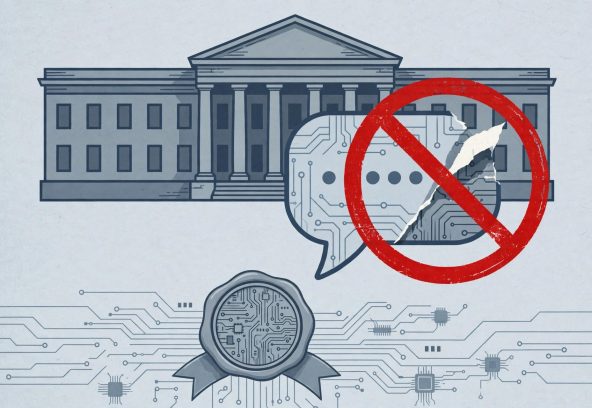
            <li><strong>Regulatory Guardrails:</strong> Establishing international standards and laws that hold developers and corporations accountable for algorithmic harm.</li>

            <li><strong>Human-in-the-Loop Systems:</strong> Ensuring that critical decisions are never entirely surrendered to automation.</li>

        </ul>
<p>Artificial intelligence is the most powerful mirror humanity has ever built. If we do not like what we see reflected in it, the fault lies not in the machine, but in ourselves. The challenge of the AI era is not merely technical; it is a profound moral test of our wisdom, empathy, and foresight.</p>

    </section>
<footer class="author-bio">

        <p><em>Published by the AI Ethics and Technology Desk. Exploring the intersection of human values and emerging digital frontiers.</em></p>

    </footer>

</article>