


<header>
<h1>The Great Symbiosis</h1>
<p class="subtitle">How Humans and AI Will Co-Create the Future</p>
</header>
<main>
<article>
<p>For decades, popular culture has framed the rise of Artificial Intelligence as a zero-sum game: a sci-fi narrative of human obsolescence where machine triumph spells human defeat. We have been conditioned to look at AI through the lens of replacement—robots taking our jobs, algorithms usurping our creativity, and cold logic eclipsing human emotion.</p>
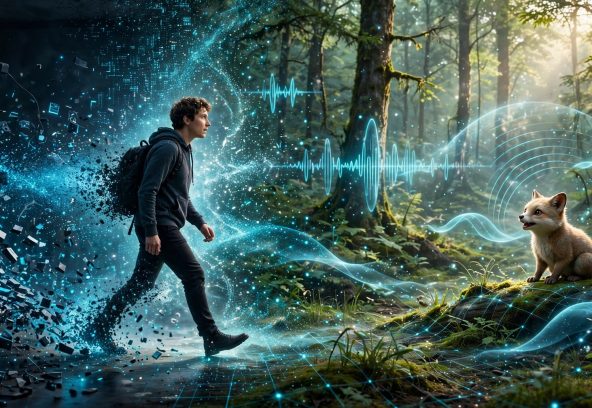
<p>However, as we stand on the precipice of the AI revolution, a far more nuanced, exciting, and ultimately hopeful reality is emerging. We are not heading toward a dystopia of human irrelevance, but rather toward an era of profound partnership. Welcome to <strong>The Great Symbiosis</strong>—a future where humans and AI do not merely coexist, but co-create.</p>
<h2>Beyond the Binary of Replacement</h2>
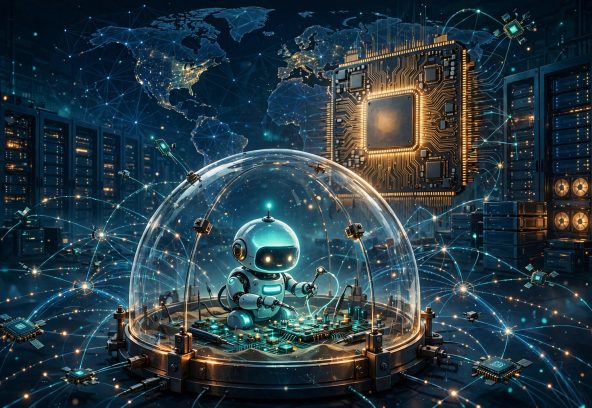
<p>To understand the future, we must first unlearn the myth that intelligence is a finite resource. When the calculator was invented, it didn't render mathematicians obsolete; it freed them from tedious arithmetic to explore higher-level mathematics. Similarly, AI is not here to replace human cognition, but to act as a cognitive exoskeleton.</p>
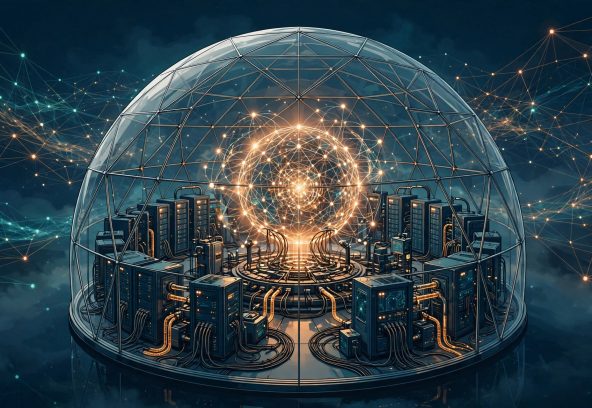
<p>AI excels at processing vast quantities of data, recognizing statistical patterns at lightning speed, and executing repetitive tasks without fatigue. Humans, on the other hand, excel at contextual understanding, emotional intelligence, ethical reasoning, abstract goal-setting, and raw imagination. When you combine the computational might of AI with the intentionality and consciousness of humanity, the result is not addition, but multiplication.</p>
<h2>Co-Creation Across Disciplines</h2>
<p>This symbiotic relationship is already reshaping how we approach complex challenges across nearly every major industry:</p>
<ul>
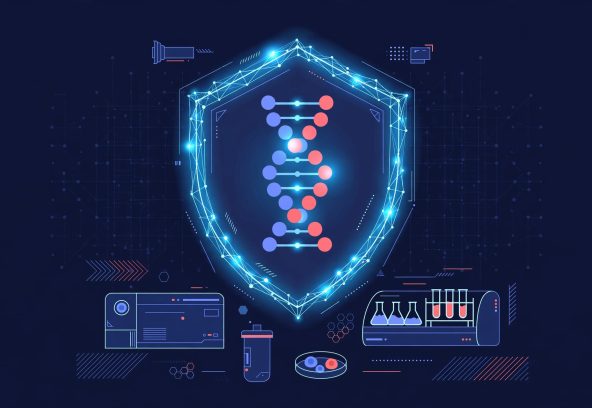
<li><strong>Science and Medicine:</strong> Researchers partnering with AI are folding proteins in minutes that once took decades, accelerating the discovery of life-saving drugs and personalized medicine. AI processes the molecular data; human scientists ask the right questions and design the clinical vision.</li>
<li><strong>Art and Creativity:</strong> Writers, musicians, and visual artists are using generative AI not as a ghostwriter, but as a digital muse. By rapidly generating variations and breaking through creative blocks, AI allows human creators to push artistic boundaries further and faster than ever before.</li>
<li><strong>Engineering and Climate Action:</strong> Tackling global warming requires optimizing complex systems—from global supply chains to smart electrical grids. AI can simulate millions of ecological scenarios, helping human policymakers and engineers implement the most effective, sustainable solutions.</li>
</ul>
<div class="highlight-box">
<p><strong>The Core Principle of Symbiosis:</strong> AI provides the <em>how</em> through raw data and execution, while humans provide the <em>why</em> through purpose, ethics, and meaning.</p>
</div>
<h2>Redefining What It Means to Be Human</h2>
<p>As machines take over the mechanical aspects of labor and analysis, a fascinating paradox occurs: technology is forcing us to become *more* human, not less. </p>
<p>When writing code, balancing spreadsheets, or drafting routine emails can be done in seconds by an AI, our value shifts from our output to our insight. The future will heavily reward distinctly human traits—empathy, leadership, cross-disciplinary curiosity, and the ability to ask profound questions. We are moving from an era of "human as worker" to an era of "human as curator, visionary, and ethicist."</p>
<h2>The Path Forward</h2>
<p>Achieving this utopian symbiosis is not guaranteed; it requires deliberate choices. We must design AI systems with transparency, fairness, and human-centric values at their core. We must reimagine education to foster critical thinking and creativity over rote memorization. Most importantly, we must approach AI with curiosity rather than fear.</p>
<p>The story of human progress has always been a story of tools—from the wheel and the printing press to the internet. AI is simply the most powerful tool we have ever forged. By embracing it as a partner rather than a rival, we open the door to a future limited only by the scope of our collective imagination.</p>
</article>
</main>
<footer>
<p>© 2023-2024 Future Insights. Exploring the intersection of humanity and technology.</p>
</footer>